Un réseau de bouches d'incendie assure un approvisionnement en eau immédiat et fiable pour la lutte contre les incendies en situation d'urgence. Grâce à l'intégration harmonieuse des pompes, des canalisations et des vannes, un système bien conçu garantit une intervention rapide, minimise les dégâts matériels et sauve des vies.
Pour les acheteurs B2B, le choix d'équipements de protection contre l'incendie va au-delà de la simple conformité réglementaire : il en va de la fiabilité et de la sécurité à long terme. Même s'il est tentant de se concentrer sur le prix d'achat, des composants de qualité inférieure risquent de provoquer une défaillance catastrophique au moment où on en a le plus besoin.
La véritable valeur réside dans la qualité des produits, les certifications et l'assistance technique. S'appuyant sur notre vaste expertise en matière de fabrication, ce guide aborde tous les aspects, des principes fondamentaux des systèmes au choix des fournisseurs, afin de vous permettre de prendre des décisions d'achat éclairées et rentables.
Qu'est-ce qu'un réseau de bouches d'incendie ?
Un réseau de bouches d'incendie est une infrastructure permanente de lutte contre l'incendie installée à l'intérieur ou à l'extérieur des bâtiments afin de fournir de l'eau à haute pression directement aux pompiers en cas d'urgence. Contrairement aux extincteurs portatifs, conçus pour maîtriser les petits incendies, un réseau de bouches d'incendie assure un approvisionnement continu en eau permettant de faire face à des incidents de grande ampleur.
L'objectif principal de ce système est simple : garantir la disponibilité immédiate d'une quantité d'eau suffisante dès qu'un incendie se déclare. Chaque seconde compte en cas d'urgence incendie. Un réseau de bouches d'incendie correctement conçu permet aux pompiers de raccorder rapidement leurs lances sans avoir à rechercher une source d'eau externe.
Dans les environnements commerciaux et industriels, le système est généralement raccordé à des réservoirs d'eau dédiés, au réseau d'alimentation en eau municipal, ou aux deux. Les pompes à incendie maintiennent une pression suffisante même lorsque plusieurs bouches d'incendie sont utilisées simultanément.
D'après notre expérience en matière de fabrication, de nombreux acheteurs internationaux pensent à tort que tous les systèmes de bouches d'incendie sont similaires. En réalité, leur conception varie considérablement en fonction :
- Hauteur du bâtiment
- Niveau de risque d'incendie
- Réglementations locales
- Disponibilité en eau
- Conditions climatiques
- Type d'occupation
Par exemple, un entrepôt abritant des produits chimiques nécessite des calculs hydrauliques très différents de ceux d'un hôtel ou d'un immeuble de bureaux. Les ingénieurs doivent déterminer le débit d'eau requis, la pression de service et la capacité du système avant de choisir les équipements.
Parmi les applications courantes, on peut citer :
- Usines de fabrication
- Entrepôts logistiques
- Usines pétrochimiques
- Aéroports
- Hôpitaux
- Universités
- Centres commerciaux
- Complexes résidentiels
- Immeubles de bureaux de grande hauteur
- Terminaux maritimes
Les systèmes de bouches d'incendie actuels s'intègrent également à des systèmes d'alarme incendie intelligents, ce qui permet aux pompes de se mettre en marche automatiquement lorsque les détecteurs de fumée déclenchent les procédures d'urgence.
Pour les acheteurs B2B, la compréhension de ces différences permet d'éviter des erreurs de conception coûteuses et garantit le respect des normes internationales en matière de sécurité incendie.
Principaux composants d'un réseau de bouches d'incendie
La fiabilité d'un réseau de bouches d'incendie dépend entièrement de celle de chacun de ses composants. Chaque élément remplit une fonction spécifique, et la défaillance d'un seul composant peut compromettre l'ensemble de l'opération de lutte contre l'incendie.
Vous trouverez ci-dessous un aperçu simplifié.
| Composant | Fonction |
|---|---|
| Bouche d'incendie | Prise d'eau pour les pompiers |
| Pompe à incendie | Maintient la pression d'eau requise |
| Réservoir d'eau | Stocke l'eau destinée à la lutte contre les incendies en cas d'urgence |
| Conduite souterraine | Alimente l'ensemble du site en eau |
| Soupape d'atterrissage | Régule le débit d'eau |
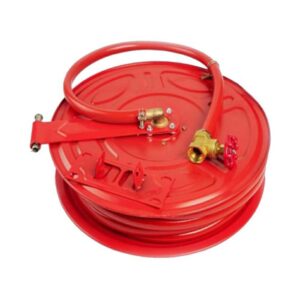
| Tuyau d'incendie | Achemine l'eau jusqu'au lieu de l'incendie |
| Lance à incendie | Permet de régler le jet de pulvérisation |
| Vanne d'isolement | Ouvre ou coupe l'arrivée d'eau |
| Manomètre | Surveille la pression de service |
Bouches d'incendie
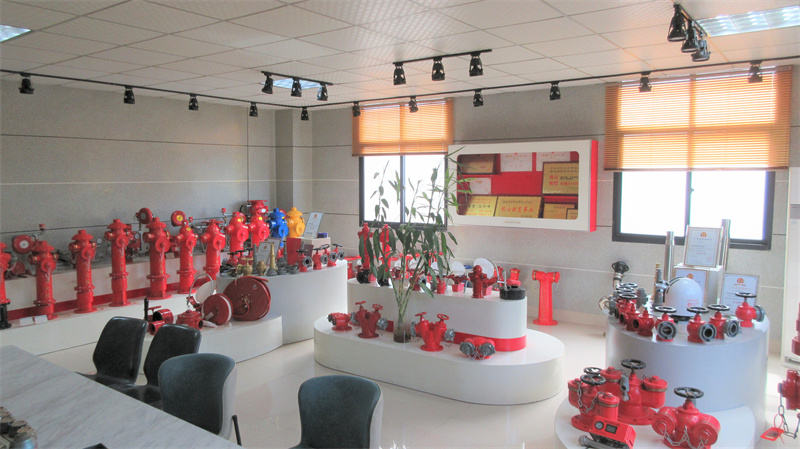
Les bouches d'incendie constituent le principal point de raccordement des lances à incendie. Les bouches d'incendie extérieures sont généralement installées autour des sites industriels et des bâtiments commerciaux, tandis que les bouches d'incendie intérieures sont placées dans les cages d'escalier et les couloirs afin d'être rapidement accessibles.
Les bouches d'incendie modernes sont fabriquées en fonte ductile, en fonte grise ou en alliages résistants à la corrosion afin de garantir une longue durée de vie dans des conditions environnementales difficiles.
Pompes à incendie
Une pompe à incendie est le cœur du système. Elle augmente la pression de l'eau lorsque le réseau municipal ne suffit pas à répondre aux besoins en matière de lutte contre les incendies.
Parmi les types de pompes courants, on trouve :
- Pompes à incendie électriques
- Pompes à incendie à moteur diesel
- Pompes à turbine verticales
- Pompes à corps divisé
- Pompes à aspiration en bout
Les performances fiables de la pompe garantissent une pression suffisante à chaque bouche d'incendie, même dans les grandes installations.
Réservoirs de stockage d'eau
Des réservoirs d'eau dédiés garantissent un approvisionnement ininterrompu en cas d'urgence. En fonction de l'ampleur du projet, les réservoirs peuvent être construits à partir :
- Béton armé
- Acier galvanisé
- Acier inoxydable
- Acier vitrifié
La capacité est calculée en fonction de la classification des risques d'incendie et de la réglementation locale en matière de construction.
Conduites
Des canalisations souterraines et aériennes assurent la distribution de l'eau dans toute la zone protégée. Les matériaux disponibles sont les suivants :
- Fonte ductile
- Acier au carbone
- HDPE
- Acier inoxydable
Un dimensionnement adéquat des canalisations permet de réduire au minimum les pertes de charge et d'assurer un approvisionnement en eau régulier.
Vannes et accessoires
Les vannes à guillotine, les vannes papillon, les clapets anti-retour et les soupapes de sûreté régulent le fonctionnement du système. Des accessoires tels que les manomètres, les détecteurs de débit et les purgeurs d'air facilitent la surveillance et la maintenance.
Tuyaux et lances à incendie
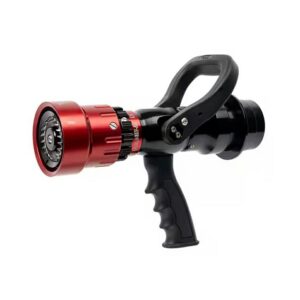
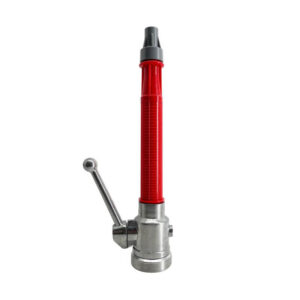
Les lances à incendie acheminent l'eau depuis les bouches d'incendie jusqu'au lieu de l'incendie. Différentes lances permettent :
- Flux direct
- Brume de brouillard
- Débit réglable
- Jet à haute pression
Le choix de tuyaux et de lances compatibles permet d'améliorer l'efficacité de la lutte contre les incendies tout en réduisant la consommation d'eau.
Du point de vue du fabricant, l'utilisation de matériaux certifiés et d'un usinage de précision prolonge considérablement la durée de vie des équipements et réduit les coûts de maintenance sur plusieurs années d'exploitation.
Comment fonctionne un réseau de bouches d'incendie ?
Bien que l'équipement semble complexe, le principe de fonctionnement d'un réseau de bouches d'incendie est simple. Tous les composants fonctionnent de concert pour acheminer l'eau sous pression là où les pompiers en ont le plus besoin.
Le processus commence par l'alimentation en eau. Selon le projet, l'eau peut provenir du réseau municipal, de réservoirs dédiés à la lutte contre les incendies, de citernes souterraines, de réservoirs surélevés ou d'une combinaison de ces sources. Dans des conditions normales, le système reste sous pression et prêt à être utilisé immédiatement.
En cas d'incendie, les pompiers raccordent leurs lances à la bouche d'incendie la plus proche. Si la pression d'eau disponible est insuffisante, la pompe à incendie se met automatiquement en marche grâce à des capteurs de pression ou au système de contrôle des alarmes incendie du bâtiment. Dans certains établissements, les opérateurs peuvent également activer la pompe manuellement.
La pompe augmente ensuite la pression de l'eau et la distribue via le réseau de canalisations souterraines ou aériennes. Des vannes de régulation garantissent que l'eau parvienne aux zones souhaitées tout en maintenant une pression stable dans l'ensemble du réseau.
Une séquence de fonctionnement type comprend :
- Détection d'incendie
- Activation de l'alarme
- Démarrage de la pompe
- Stabilisation de la pression de l'eau
- Ouverture de la vanne d'une borne d'incendie
- Déploiement du tuyau
- Débit d'eau par la buse
- Poursuivre les opérations de lutte contre l'incendie jusqu'à ce que la situation d'urgence soit maîtrisée
Plusieurs caractéristiques techniques contribuent à garantir un fonctionnement fiable :
- Pompes diesel de secours en cas de coupure de courant
- Des pompes de régulation pour maintenir une pression normale dans le système
- Soupapes de sécurité destinées à empêcher toute surpression
- Des clapets anti-retour pour empêcher le reflux de l'eau
- Vannes d'isolement pour faciliter l'entretien
Dans les grandes installations industrielles, plusieurs bouches d'incendie peuvent fonctionner simultanément. Les ingénieurs calculent minutieusement la demande hydraulique afin de garantir qu'un débit d'eau suffisant parvienne à chaque sortie sans perte de pression significative.
D'après notre expérience auprès des prestataires EPC et des clients industriels, l'un des facteurs les plus souvent négligés est celui des contrôles de routine. Même un réseau de bouches d'incendie bien conçu peut présenter des canalisations bouchées, des vannes endommagées ou des composants de pompe usés si l'entretien préventif est négligé.
Un système correctement conçu et entretenu régulièrement offre une protection fiable aux usines, entrepôts, ports, aéroports, hôpitaux et bâtiments commerciaux, permettant ainsi aux propriétaires de ces installations d'avoir davantage confiance dans le fait que les équipements essentiels de protection contre l'incendie fonctionneront lorsque cela comptera le plus.
Types de réseaux de bouches d'incendie
Le choix d'un système de bouches d'incendie adapté est l'une des décisions les plus importantes à prendre lors de la phase de conception de tout projet de protection contre l'incendie. Les risques d'incendie, la configuration des bâtiments et les exigences réglementaires locales varient d'un bâtiment à l'autre. Opter pour un système inadapté peut entraîner une augmentation des coûts d'installation, réduire l'efficacité de la lutte contre l'incendie et poser des problèmes de conformité.
En tant que fabricant travaillant avec des entrepreneurs, des distributeurs et des bureaux d'études, nous recommandons d'évaluer la hauteur du bâtiment, son type d'occupation, l'approvisionnement en eau disponible et les capacités d'entretien avant de choisir un système d'hydrants.
Système de colonne montante humide
Un système de colonnes d'alimentation en eau sous pression maintient l'eau à l'intérieur des canalisations en permanence. Il est généralement installé dans les immeubles de grande hauteur où les pompiers ont besoin d'un accès immédiat à de l'eau sous pression.
Les avantages sont les suivants
- Disponibilité immédiate de l'eau
- Une intervention d'urgence plus rapide
- Risque moindre de retard opérationnel
- Convient aux bâtiments disposant d'un approvisionnement en eau fiable
Parmi les applications courantes, on peut citer :
- Immeubles de bureaux
- Hôtels
- Hôpitaux
- Centres commerciaux
- Immeubles d'habitation de grande hauteur
Système de colonne montante à sec
Contrairement aux colonnes humides, les colonnes sèches ne contiennent pas d'eau en temps normal. En cas d'urgence, les pompiers raccordent des camions-pompes externes pour alimenter le système.
Les avantages comprennent :
- Coût d'installation réduit
- Entretien réduit dans les climats froids
- Risque réduit de corrosion des canalisations due à la présence d'eau stagnante
Les colonnes sèches sont souvent installées dans les immeubles commerciaux de hauteur moyenne, lorsque la réglementation locale le permet.
Réseau de bouches d'incendie extérieures
Les bouches d'incendie extérieures permettent d'assurer la protection de vastes espaces ouverts et d'installations industrielles. Elles permettent aux pompiers de se raccorder directement au réseau d'alimentation en eau du site.
Les applications les plus courantes sont les suivantes
- Usines de fabrication
- Installations pétrolières et gazières
- Ports
- Centres logistiques
- Zones de stockage de produits chimiques
Réseau souterrain de bouches d'incendie
Les bouches d'incendie souterraines sont installées sous le niveau du sol et accessibles par des couvercles en surface. On les choisit souvent lorsque des contraintes esthétiques ou un espace limité rendent les bouches d'incendie en surface inadaptées.
Réseau de colonnes montantes
Les réseaux de colonnes montantes permettent aux pompiers d'accéder à l'eau à différents étages d'un bâtiment.
En fonction des normes locales, les réseaux de colonnes montantes peuvent être :
- Classe I
- Classe II
- Classe III
Chaque catégorie s'adresse à des utilisateurs différents, allant des pompiers professionnels aux occupants des bâtiments.
Comparaison des systèmes de bouches d'incendie courants
| Type de système | Eau à l'intérieur du tuyau | Meilleure application | Maintenance |
|---|---|---|---|
| Colonne humide | Oui | Immeubles de grande hauteur | Modéré |
| Colonne sèche | Non | Immeubles de hauteur moyenne | Faible |
| Hydrant extérieur | Oui | Installations industrielles | Modéré |
| Bouche d'incendie souterraine | Oui | Infrastructures urbaines | Modéré |
| Tuyau d'alimentation | Cela dépend de la conception | Grands bâtiments commerciaux | Modéré |
Le choix d'une configuration adaptée permet d'améliorer les temps de réponse, de simplifier la maintenance et de garantir le respect des réglementations régionales en matière de protection contre les incendies.
Endroits où les réseaux de bouches d'incendie sont généralement installés
Les réseaux de bouches d'incendie assurent la protection de presque tous les types de bâtiments commerciaux et industriels. Leur conception varie toutefois en fonction de l'affectation des locaux, de la charge calorifique et des exigences opérationnelles.
Parmi les installations les plus courantes, on peut citer :
Sites de production
Les usines abritent souvent des matériaux inflammables, des équipements électriques et des machines de production. Les réseaux d'hydrants fournissent aux pompiers suffisamment d'eau pour maîtriser les incendies de grande ampleur avant qu'ils ne se propagent le long des chaînes de production.
Entrepôts
Les entrepôts modernes peuvent stocker des milliers de palettes de produits. En cas d'incendie, le feu peut se propager rapidement en raison de la forte densité de stockage.
Les réseaux de bouches d'incendie offrent :
- Alimentation en eau continue
- Plusieurs points d'intervention des pompiers
- Amélioration de l'accès des pompiers
Hôpitaux
Les hôpitaux ont besoin d'une protection incendie sans faille, car l'évacuation des patients peut s'avérer difficile.
Les réseaux d'hydrants fonctionnent en complément :
- Alarmes incendie
- Systèmes d'évacuation des fumées
- Éclairage de secours
- Systèmes d'arrosage
Hôtels
Les hôtels accueillent des centaines de clients qui ne connaissent pas les issues de secours.
Des réseaux d'hydrants fiables permettent aux pompiers d'intervenir rapidement tout en assurant la sécurité des clients et en protégeant les biens.
Aéroports
Les terminaux d'aéroport, les hangars et les installations de stockage de carburant nécessitent des systèmes de lutte contre l'incendie à haute capacité, capables de faire face à des situations d'urgence complexes.
Écoles et universités
Les établissements d'enseignement accueillent souvent un grand nombre de personnes réparties dans plusieurs bâtiments. Les systèmes d'extincteurs automatiques améliorent la préparation aux situations d'urgence à l'échelle du campus.
Centres commerciaux
Les grands complexes commerciaux nécessitent des réseaux de bouches d'incendie étendus en raison de leur taille et de la fréquentation qu'ils génèrent.
Parcs industriels
Les parcs industriels installent souvent des bouches d'incendie extérieures à intervalles réguliers afin de protéger plusieurs usines grâce à une infrastructure hydraulique commune.
En tant que fabricant, nous adaptons souvent la configuration des bouches d'incendie en fonction des plans des projets, afin de garantir une couverture optimale tout en réduisant les coûts d'installation superflus.
Éléments à prendre en compte lors de la conception d'un réseau de bouches d'incendie
C'est une conception adéquate qui détermine l'efficacité d'un réseau de bouches d'incendie en cas d'urgence. Si la qualité des équipements est essentielle, même les meilleurs composants ne peuvent compenser une mauvaise conception du réseau.
Les principaux facteurs de conception sont les suivants :
Capacité d'approvisionnement en eau
La source d'eau disponible doit fournir un débit suffisant pour toute la durée nécessaire à la lutte contre l'incendie.
Parmi les sources d'eau possibles, on peut citer :
- Réseaux d'eau municipaux
- Réservoirs souterrains
- Réservoirs surélevés
- Bassins d'eau d'extinction
Pression de service
Chaque bouche d'incendie doit maintenir une pression suffisante pour permettre un jet d'eau efficace.
La pression dépend :
- Hauteur du bâtiment
- Pertes par frottement dans les conduites
- Débit de la pompe
- Nombre de bouches d'incendie en service simultanément
Diamètre du tuyau
Des canalisations de section insuffisante entraînent une perte de charge accrue.
Les conduites surdimensionnées font grimper inutilement les coûts des projets.
Les calculs hydrauliques permettent de déterminer le diamètre optimal des canalisations.
Classification des dangers
Les risques d'incendie varient considérablement d'un secteur à l'autre.
En voici quelques exemples :
| Installation | Risque d'incendie |
|---|---|
| Bureau | Faible |
| École | Faible |
| Entrepôt | Moyen |
| Usine | Moyen à élevé |
| Usine chimique | Haut |
| Terminal pétrolier | Très élevé |
Plan du bâtiment
Les ingénieurs doivent veiller à ce que les bouches d'incendie restent accessibles dans l'ensemble du bâtiment.
Parmi ces facteurs, on peut citer :
- Portée maximale du tuyau
- Emplacement de la cage d'escalier
- Voies d'accès extérieures
- Accès des véhicules des pompiers
Développement futur
De nombreuses installations industrielles s'agrandissent au fil du temps.
Prévoir dès aujourd’hui une capacité supplémentaire pour les canalisations peut permettre de réduire considérablement les coûts de modification futurs.
D'après notre expérience en ingénierie, les conceptions évolutives offrent souvent une meilleure valeur à long terme que les systèmes conçus uniquement pour les dimensions actuelles des bâtiments.
Normes et certifications relatives aux réseaux de bouches d'incendie
Les équipements de protection contre l'incendie doivent être conformes aux normes internationalement reconnues afin de garantir leur fiabilité, leur sécurité et leur conformité réglementaire.
Parmi les normes courantes, on peut citer :
| Standard | Objectif |
|---|---|
| NFPA | Directives de conception en matière de protection contre l'incendie |
| ISO | Systèmes de gestion de la qualité |
| Normes EN | Exigences européennes en matière de protection contre l'incendie |
| UL | Certification de sécurité des produits |
| Approuvé par la FM | Vérification des performances |
Les fabricants devraient également mettre en place des systèmes de qualité tels que :
- Système de gestion de la qualité ISO 9001
- Contrôle des matières entrantes
- Essais sous pression
- Contrôle dimensionnel
- Essais de réception en usine
Pour les acheteurs internationaux, demander les documents de certification avant de passer commande permet de réduire les risques liés au projet et facilite l'obtention des autorisations lors de l'installation et de l'inspection.
Processus d'installation et de mise en service
Même un équipement de protection incendie haut de gamme peut ne pas fonctionner correctement s'il n'est pas installé dans les règles de l'art. Une installation et une mise en service adéquates permettent de vérifier que chaque composant fonctionne comme prévu avant la mise en service du système.
Une procédure d'installation type comprend :
- Étude du site et analyse technique
- Pose de canalisations souterraines
- Installation de canalisations en surface
- Installation d'une pompe à incendie
- Installation d'une borne d'incendie
- Installation d'une vanne
- Raccordement du réservoir d'eau
- Essais sous pression
- Essais de débit
- Purge du système
- Mise en service définitive
- Tests d'acceptation par le client
Lors de la mise en service, les ingénieurs vérifient :
- Pression de l'eau
- Performances de la pompe
- Fonctionnement de la vanne
- Fuite
- Intégration des alarmes
- Démarrage automatique de la pompe
L'assistance fournie par le fabricant lors de la mise en service peut réduire considérablement les problèmes liés au démarrage. De nombreux fabricants fournissent de la documentation technique, des plans d'installation et une assistance technique à distance afin d'accompagner les maîtres d'œuvre et les installateurs.
Exigences en matière d'entretien et d'inspection
Un réseau de bouches d'incendie constitue un investissement à long terme qui nécessite des contrôles réguliers pour garantir sa fiabilité. L'entretien préventif permet de détecter les problèmes avant qu'ils ne se transforment en situations d'urgence.
Les tâches d'entretien courant comprennent :
Inspection mensuelle
- Inspection visuelle des bouches d'incendie
- Vérification du fonctionnement de la vanne
- Vérification des manomètres
- Détection des fuites
Entretien trimestriel
- Essais de pompes
- Lubrification
- Contrôle de la batterie (pompes diesel)
- Tests du panneau de commande
Contrôles annuels
- Essais à plein débit
- Essais sous pression
- Inspection des tuyaux
- Essais sur les buses
- Purge des canalisations
Problèmes courants
Parmi les problèmes courants, on peut citer :
- Corrosion
- Fuite de valve
- Conduites obstruées
- Défaillance du joint de la pompe
- Perte de pression
- Sorties de bouches d'incendie endommagées
La tenue de registres d'inspection détaillés simplifie également les audits réglementaires et facilite la gestion à long terme des actifs.
Système de bouches d'incendie vs système de gicleurs d'incendie
Bien que ces deux systèmes soient indispensables à la protection contre les incendies, ils ont des fonctions différentes.
| Fonctionnalité | Réseau de bouches d'incendie | Système d'extinction automatique par gicleurs |
|---|---|---|
| Utilisateur principal | Pompiers | Fonctionnement automatique |
| Activation | Manuel | Automatique |
| Débit d'eau | Haut | Localisé |
| Couverture | Grandes surfaces | Chambres individuelles |
| Coût de l'installation | Modéré | Plus élevé |
| Idéal pour | Sites industriels | Bâtiments commerciaux |
De nombreux établissements installent ces deux systèmes conjointement afin d'assurer une protection complète contre les incendies.
Comment les fabricants garantissent la qualité de leurs produits
La qualité commence bien avant le début de la production. Les fabricants réputés mettent en œuvre un contrôle qualité rigoureux à chaque étape de la fabrication.
Les mesures d'assurance qualité habituelles comprennent notamment :
- Vérification des matières premières
- Usinage CNC
- Moulage de précision
- Traitement de surface
- Essais sous pression
- Contrôle dimensionnel
- Contrôle de l'assemblage
- Essais fonctionnels finaux
Forts de notre expérience dans le domaine de la fabrication, nous recommandons également :
- Traçabilité des matériaux
- Registres de production par lots
- Contrôles effectués par des organismes tiers
- Essais de réception en usine (FAT)
- Personnalisation OEM et ODM
- Emballage conforme aux normes d'exportation
Ces processus contribuent à garantir une performance constante des produits dans le cadre de projets internationaux.
Point de vue du fabricant : pourquoi les acheteurs B2B choisissent des fournisseurs expérimentés
Pour les acheteurs étrangers, le choix d'un fournisseur ne se résume pas à une simple comparaison des prix. La valeur à long terme dépend des capacités de fabrication, de l'expertise technique et d'un accompagnement fiable.
De nombreux fabricants expérimentés proposent :
- Une production en interne pour un meilleur contrôle qualité
- Personnalisation OEM/ODM en fonction des exigences du projet
- Systèmes de gestion de la qualité certifiés ISO 9001
- Dessin technique et assistance technique
- Contrôles en usine avant expédition
- Délais de livraison stables et emballage pour l'exportation
- Expérience en logistique internationale
D'après notre expérience auprès de distributeurs, d'entrepreneurs et de promoteurs internationaux, une communication technique précoce permet d'éviter les erreurs dans les cahiers des charges et de réduire les retards lors de l'installation.
Comment choisir le bon fournisseur de systèmes de bornes d'incendie
Tous les fournisseurs n'offrent pas le même niveau de qualité ou de service. Avant de passer commande, évaluez les partenaires potentiels à l'aide de la liste de contrôle suivante :
- Expérience dans la fabrication d'équipements de protection contre les incendies
- Respect des normes et certifications internationales
- Capacité à fournir des services OEM ou ODM
- Ingénierie et assistance technique
- Capacité de production stable
- Des délais de livraison fiables
- Procédures de contrôle qualité et d'essais
- Un service après-vente réactif
Posez des questions concrètes telles que :
- Le fournisseur est-il en mesure de fournir des rapports d'essais de pression ?
- Les pièces de rechange sont-elles facilement disponibles ?
- Quel est le délai de fabrication habituel ?
- Les produits peuvent-ils être adaptés aux normes locales ?
- Le fournisseur possède-t-il une expérience en matière d'exportation sur votre marché cible ?
Un partenaire de fabrication fiable permet de réduire les risques liés au projet, d'améliorer l'efficacité de l'installation et d'assurer la maintenance à long terme.
Tendances futures en matière de technologie des bouches d'incendie
Les systèmes de protection contre l'incendie ne cessent d'évoluer grâce aux progrès réalisés dans les domaines de la surveillance numérique et des matériaux.
Parmi les tendances émergentes, on peut citer :
- Surveillance de la pression et du débit via l'Internet des objets (IoT)
- Diagnostic à distance et maintenance prédictive
- Matériaux composites résistants à la corrosion
- Systèmes de pompes à incendie à faible consommation d'énergie
- Intégration intelligente aux systèmes de gestion technique des bâtiments (GTB)
- Fabrication durable et matériaux recyclables
Ces innovations permettent aux exploitants d'installations d'améliorer la fiabilité des systèmes tout en réduisant les coûts de maintenance tout au long du cycle de vie des équipements.
FAQ
Quelle est la différence entre un réseau de bouches d'incendie et un système d'extinction automatique à sprinklers ?
Un réseau de bouches d'incendie permet aux pompiers d'accéder manuellement à de l'eau sous haute pression via des bouches d'incendie et des lances, ce qui le rend adapté à la lutte contre les incendies de grande ampleur. Un système d'extinction automatique par gicleurs se déclenche automatiquement lorsque la chaleur atteint un certain seuil, permettant ainsi de maîtriser les incendies dès leur apparition. De nombreux établissements commerciaux utilisent ces deux systèmes conjointement pour bénéficier d'une protection complète.
À quelle fréquence faut-il inspecter un réseau de bouches d'incendie ?
Les inspections visuelles doivent généralement être effectuées tous les mois, tandis que les pompes, les vannes et autres composants essentiels doivent faire l'objet de contrôles programmés tout au long de l'année. Une inspection annuelle complète, comprenant notamment des essais de débit et de pression, permet de s'assurer que le système reste conforme et prêt à être utilisé en cas d'urgence.
Quelles certifications les acheteurs B2B doivent-ils rechercher ?
Les acheteurs doivent privilégier les fournisseurs disposant de certifications reconnues, telles que la norme ISO 9001 relative à la gestion de la qualité, et dont les produits ont été testés ou homologués conformément à des normes telles que les normes UL, FM, les recommandations de la NFPA ou les exigences EN applicables. La certification atteste que le fabricant applique des pratiques cohérentes en matière de qualité et de performance.
Les systèmes de bouches d'incendie peuvent-ils être adaptés à différents projets ?
Oui. Les fabricants adaptent généralement les dimensions des tuyaux, la configuration des bouches d'incendie, la disposition des vannes, les pressions nominales, les matériaux et les accessoires afin de répondre aux exigences spécifiques de chaque projet, aux réglementations locales, aux conditions environnementales et aux préférences des clients. Des services OEM et ODM sont largement disponibles pour les commandes B2B de grande envergure.
Quelle est la durée de vie habituelle d'un réseau de bouches d'incendie ?
Avec une installation correcte, des matériaux de qualité et un entretien régulier, un réseau de bouches d'incendie peut fonctionner de manière fiable pendant plusieurs décennies. Des inspections régulières, une protection contre la corrosion, le remplacement en temps opportun des composants usés et le respect des calendriers d'entretien permettent de prolonger considérablement sa durée de vie opérationnelle.
Pourquoi est-il important de choisir le bon fabricant ?
Un fabricant fiable ne se contente pas de proposer des produits conformes aux normes. Il offre également une assistance technique, une documentation de qualité, une production constante et un service après-vente fiable. Ces éléments contribuent à réduire les problèmes d'installation, à minimiser les coûts liés au cycle de vie et à garantir les performances à long terme des systèmes dans le cadre de projets commerciaux et industriels.
Conclusion
Un réseau d'hydrants d'incendie robuste constitue la pierre angulaire de la sécurité incendie dans les secteurs commercial et industriel. Le choix d'un système adapté, la conformité aux normes internationales et des pratiques d'entretien rigoureuses sont essentiels pour garantir une efficacité fiable en cas d'urgence.
Pour les acheteurs, la réussite à long terme d'un projet ne se limite pas au prix des équipements. Elle nécessite d'évaluer de manière approfondie l'expertise industrielle du fournisseur, son assurance qualité et ses capacités en matière d'assistance technique.
En tant que fabricant expérimenté, nous comprenons ces enjeux mondiaux. Nous allions un contrôle qualité rigoureux, des certifications internationales et un accompagnement technique réactif afin de vous proposer des solutions de protection incendie fiables et sur mesure, auxquelles vous pouvez faire confiance.