Fire safety is not just about having extinguishers. It’s about storing them properly, protecting them, and making sure YOU can reach them fast when every second counts. As a manufacturer working closely with engineers and building owners, we’ve seen how the right enclosure improves safety and compliance.
This guide explains the Types of Fire Extinguisher Box used across commercial, industrial, and public buildings. You’ll gain practical insights based on real manufacturing and installation experience, not theory alone.
Types of Fire Extinguisher Box
Fire extinguisher cabinets come in many forms. Each type serves a clear purpose depending on location, risk level, and building design. Choosing the wrong one can cause delays during emergencies or lead to compliance issues.
Common categories include wall-mounted, recessed, and floor-standing units. Wall-mounted cabinets save space and work well in corridors. Recessed boxes offer a clean look and reduce obstruction. Floor-standing cabinets are ideal for warehouses and open industrial areas.
From a B2B perspective, YOU should consider traffic flow, visibility, and extinguisher size. A well-chosen box improves response time and protects equipment from damage. That’s a win for safety managers and property owners alike.
Material-Based Fire Extinguisher Box Options
Material selection affects durability, cost, and lifespan. Steel cabinets are widely used due to strength and affordability. They resist impact and suit factories, parking garages, and logistics centers.
Stainless steel options are popular in food plants, hospitals, and coastal areas. They resist corrosion and stay clean. Plastic and composite cabinets are lightweight and suitable for mild indoor environments.
As a manufacturer, we often help YOU match materials with exposure conditions. Choosing the right material reduces replacement costs and ensures long-term performance.
Material Comparison Chart
| Material | Best Use Area | Key Benefit |
|---|---|---|
| Steel | Industrial buildings | High strength |
| Stainless steel | Food & medical | Corrosion resistance |
| Plastic/composite | Offices & schools | Lightweight, low cost |
Indoor Fire Extinguisher Box Solutions
Indoor cabinets focus on accessibility and appearance. Offices prefer recessed or slim wall-mounted designs that blend with interiors. Factories need rugged boxes that handle vibration and dust.
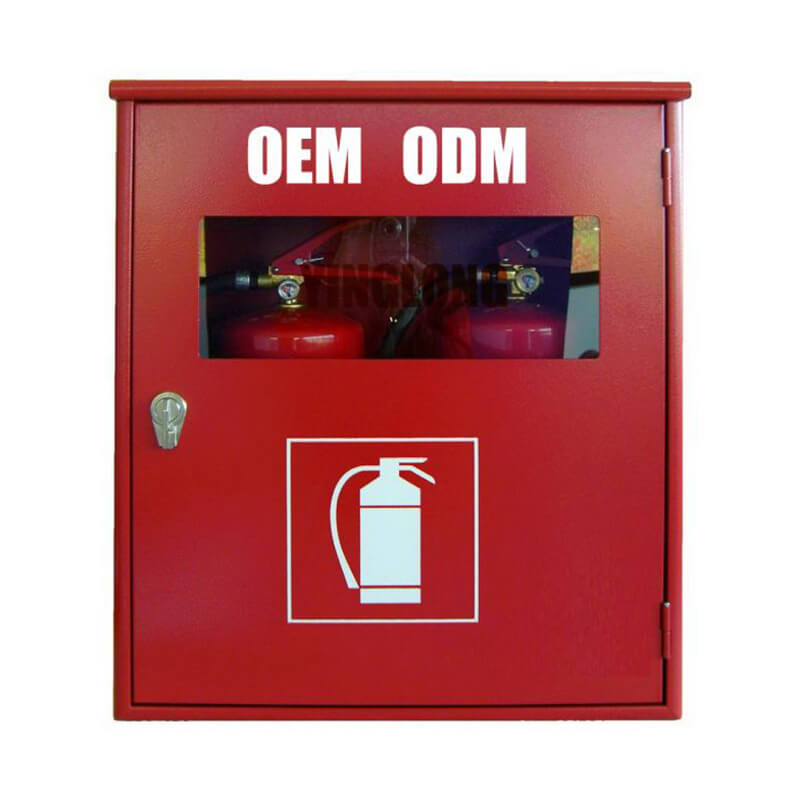
Glass-front cabinets are common indoors. They allow quick visual checks without opening the door. This supports routine inspections and reduces maintenance time.
From the customer’s view, YOU benefit from faster audits and fewer compliance risks. Indoor solutions should always balance safety, design, and cost efficiency.
Outdoor Fire Extinguisher Box Applications
Outdoor environments demand stronger protection. Rain, sunlight, and dust can damage extinguishers if left exposed. Outdoor boxes use sealed doors, weather strips, and UV-resistant coatings.
In industrial yards and fuel stations, corrosion resistance is critical. Stainless steel or coated steel cabinets extend service life. Proper drainage design also prevents water buildup.
Building owners often overlook outdoor storage. Yet, choosing the right enclosure protects investment and ensures readiness during emergencies.
Fire Extinguisher Box by Door Type
Door design affects usability. Solid metal doors provide full protection and are ideal for harsh environments. Glass-front doors improve visibility and inspection speed.
Some cabinets include breakable glass panels for emergency access. Others use soft-close hinges to reduce noise in offices. Lockable options help prevent misuse in public areas.
YOU should align door type with risk level and user behavior. The goal is quick access without compromising safety.
Compliance and Safety Standards
Fire extinguisher cabinets must meet local and international codes. In the U.S., guidance often follows NFPA standards. You can review official references at the National Fire Protection Association website: https://www.nfpa.org.
Compliance ensures correct mounting height, labeling, and accessibility. Non-compliant boxes may lead to fines or failed inspections. Engineers and facility managers should always verify specifications before installation.
As manufacturers, we design cabinets to meet these standards, saving YOU time and regulatory headaches.
Custom Fire Extinguisher Box Manufacturing
Standard sizes don’t always fit real projects. OEM and custom solutions allow YOU to match extinguisher size, branding, and building layout. Custom color, logo printing, and special dimensions are common requests.
For large projects, custom cabinets also improve site consistency. Engineers appreciate precise fit, while building owners value professional appearance.
Working directly with a manufacturer shortens lead times and improves quality control. That’s a clear advantage for B2B buyers.
Comparison Chart: Different Types of Fire Extinguisher Box
| Type of Fire Extinguisher Box | Installation Location | Key Advantages | Typical Applications |
|---|---|---|---|
| Wall-Mounted Box | Walls, corridors | Space-saving, easy access | Offices, schools, hospitals |
| Recessed Box | Inside wall cavities | Clean appearance, reduced obstruction | Hotels, commercial buildings |
| Floor-Standing Box | Open floor areas | Supports large extinguishers | Warehouses, factories |
| Steel Fire Extinguisher Box | Indoor & semi-outdoor | High strength, cost-effective | Industrial facilities |
| Stainless Steel Box | Outdoor & corrosive areas | Rust resistance, long lifespan | Food plants, coastal buildings |
| Plastic/Composite Box | Indoor, low-risk areas | Lightweight, economical | Offices, residential buildings |
| Glass-Front Box | Indoor visible areas | Easy inspection, quick identification | Public buildings |
| Solid Door Box | Harsh environments | Maximum protection | Industrial and outdoor sites |
Choosing the Right Fire Extinguisher Box
Selection starts with risk assessment. Consider extinguisher type, location, and user access. High-risk areas need strong, visible cabinets. Low-risk offices may prioritize design.
Ask these questions before buying:
- Where will the box be installed?
- What extinguisher size is required?
- Is indoor or outdoor protection needed?
When YOU answer these clearly, choosing becomes simple and cost-effective.
Maintenance and Long-Term Value
A good cabinet reduces maintenance effort. Easy-open doors speed inspections. Durable coatings reduce repainting. Clear labeling improves audits.
From long-term experience, quality boxes lower total ownership cost. They protect extinguishers and extend service life. That’s a smart investment for any facility.
What are the most common types of fire extinguisher box used in commercial buildings?
The most common types include wall-mounted, recessed, and floor-standing fire extinguisher boxes. Wall-mounted cabinets suit corridors and offices, recessed boxes provide a flush, aesthetic finish, and floor-standing cabinets are ideal for warehouses and open industrial spaces with large extinguishers.
How do I choose the right fire extinguisher box for my facility?
YOU should consider extinguisher size, installation environment, indoor or outdoor exposure, and user accessibility. High-traffic or high-risk areas require durable, visible cabinets, while offices may prioritize recessed or glass-front designs for inspection convenience and appearance.
Are outdoor fire extinguisher boxes different from indoor models?
Yes. Outdoor fire extinguisher boxes are designed with weather-resistant coatings, sealed doors, and corrosion-resistant materials. These features protect extinguishers from rain, dust, sunlight, and temperature changes, ensuring reliable performance in harsh environments.
What materials are best for fire extinguisher boxes in industrial environments?
Steel is widely used for industrial applications due to its strength and cost efficiency. In corrosive or coastal areas, stainless steel is recommended. Plastic or composite cabinets are suitable for low-risk indoor environments with minimal physical impact.
Can fire extinguisher boxes be customized for large projects or OEM orders?
Absolutely. Manufacturers can provide custom dimensions, colors, logos, door types, and mounting solutions. OEM fire extinguisher boxes help standardize large projects, improve branding consistency, and ensure precise compatibility with specific extinguisher models.
Do fire extinguisher boxes require regular inspection or maintenance?
Yes. Cabinets should be inspected during routine fire safety checks. Inspectors should verify door operation, visibility, labeling, and mounting condition. A well-designed fire extinguisher box reduces inspection time and helps YOU pass safety audits more efficiently.
Final Thoughts
Choosing the right fire extinguisher box is more than a compliance task—it’s a long-term safety and asset-protection decision. The correct cabinet improves visibility, protects equipment, speeds emergency response, and reduces maintenance costs over time. When YOU work directly with a manufacturer, you gain access to material expertise, custom sizing, and consistent quality control. This ensures every fire extinguisher box fits your project requirements, building layout, and regulatory needs. If you want to maximize safety value while controlling lifecycle cost, partnering with an experienced manufacturer is the smartest move.