
The Manufacturing of Fire Hose process is a fascinating journey of engineering, safety science, and precision. This article uncovers every critical detail about how fire hoses are made, how they perform, and why they matter so much in firefighting. If you’ve ever wondered what keeps a fire hose strong enough to withstand high pressure, heat, and rough surfaces—this guide has the answers.
Introduction to Manufacturing of Fire Hose
The Manufacturing of Fire Hose is one of the most important processes in the firefighting sector, and it plays a huge role in protecting people and property. When a firefighter pulls a hose toward a burning building, they depend on a product manufactured with extreme care. The reliability of this equipment can mean the difference between control and chaos.
Fire hoses must be durable yet flexible. They must resist heat, pressure, chemicals, and abrasion. Achieving all this is not simple. It requires advanced machinery, strict standards, and skilled hands. Even though the job looks straightforward—water goes in, water comes out—the technology behind making a fire hose is surprisingly complex. The process includes weaving, coating, curing, bonding, and testing, all designed to ensure that every hose can handle real-life firefighting challenges.
Fire Hose Manufacturing Process
The Manufacturing of Fire Hose involves many stages such as material selection, weaving, rubber lining, and pressure testing. These stages require careful engineering because a single weak spot can cause a hose to fail during a fire emergency. Inside every hose, you’ll find a combination of synthetic fibers for strength, rubber material for water sealing, and coatings for flexibility and heat resistance.
In many factories, the production line starts with yarn winding and ends with precision coupling installation. Each fire hose carries a history of craftsmanship, technical control, and quality assurance.
Understanding Materials the of Fire Hose
Materials influence everything—from how much pressure a hose can take to how long it lasts. Fire hose manufacturers choose materials that withstand harsh firefighting environments.
Common Materials Used
Polyester Yarn: Provides tensile strength and abrasion resistance.
Nylon Filament: Adds flexibility and helps prevent tearing.
EPDM or Rubber: Forms the inner lining to ensure water-tightness.
Polyurethane (PU): Used for lightweight and chemical-resistant hoses.
Why These Materials Matter
Fire hoses often drag across sharp debris and hot surfaces. They must remain flexible while resisting pressure surges. The manufacturing process ensures these materials work together as one unit.
Core Components Used in the Manufacturing of Fire Hose
A typical fire hose consists of multiple layers:
The Jacket
The outer layer protects the hose from wear. It is usually made from woven polyester or nylon.
The Liner
This interior layer holds the water. Most liners are made of EPDM rubber or thermoplastic polyurethane.
The Reinforcement
Some hoses use reinforced yarns between the liner and outer jacket to add structural strength.
The Couplings
Made from aluminum or brass, couplings allow firefighters to connect hoses quickly.
Each component must be precisely engineered to ensure overall hose performance.
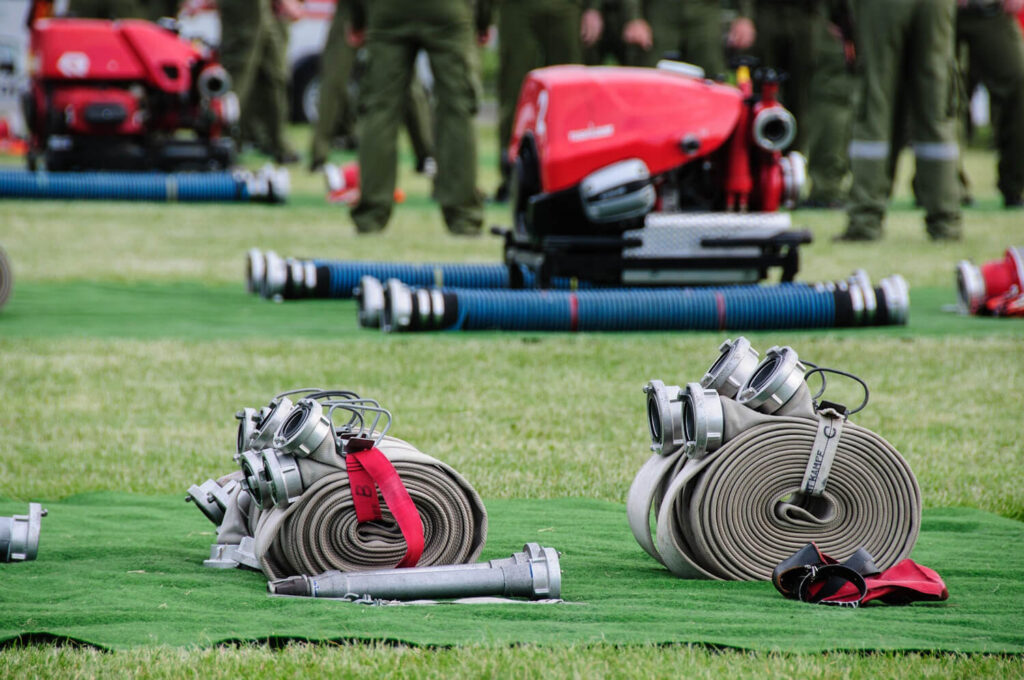
Modern Technology in the Manufacturing of Fire Hose
Technology continues to revolutionize the Manufacturing of Fire Hose.
Automated Weaving Machines
Modern circular looms weave hose jackets with exact patterns that enhance strength.
Extrusion and Vulcanization
Rubber liners are extruded in consistent thickness and cured under heat.
Computerized Testing Equipment
Every hose undergoes pressure, tensile, and bending tests using digital machines.
Laser Cutting and Finishing
This ensures clean edges and precise coupling installation.
Step-by-Step Manufacturing of Fire Hose Process
Below is a simplified view of how fire hoses are made:
Step 1: Yarn Preparation
Yarns are wound, twisted, and strengthened for weaving.
Step 2: Weaving the Jacket
Circular looms produce seamless woven jackets.
Step 3: Liner Extrusion
Rubber or PU material is extruded into a thin tube.
Step 4: Jacket-Liner Bonding
Heat, pressure, and adhesive bonding combine the jacket with the inner liner.
Step 5: Vulcanization
The hose is cured, giving the liner elasticity and adhesion strength.
Step 6: Coupling Attachment
Metal couplings are crimped or expanded onto the hose ends.
Step 7: Final Pressure Testing
Every hose is tested to ensure it can withstand high-pressure water flow.
Quality Standards in the Manufacturing of Fire Hose Industry
Hoses must pass strict certifications:
| Standard | Description |
|---|---|
| NFPA 1961 | US Standard for fire hose manufacturing |
| UL Certification | Ensures reliable performance and safety |
| EN 14540 | European standard for pressure and durability |
| ISO 9001 | Ensures consistent manufacturing quality |
These standards protect both manufacturers and firefighters.
Types of Fire Hoses Made Through the Manufacturing of Fire Hose Process
Fire hose types vary by application:
Attack Hoses
Used inside buildings for direct firefighting.
Supply Hoses
Large diameter hoses used to move water from hydrants.
Booster Hoses
Rubber-covered hoses used in initial response.
Forestry Hoses
Lightweight hoses for wildland firefighting.
Industrial Hoses
Used in mines, oil fields, chemical plants, and more.
Performance Testing in the Manufacturing of Fire Hose Facilities
Testing is the backbone of fire hose manufacturing:
Hydrostatic Testing
Hoses are filled with high-pressure water to test burst resistance.
Abrasion Testing
Simulates hose dragging across rough surfaces.
Heat Testing
Checks the hose stability under extreme temperatures.
Flexibility Testing
Ensures hoses can bend without kinking or cracking.
Challenges Faced in the Manufacturing of Fire Hose Sector
Manufacturers encounter difficulties, including:
- Rising raw material costs
- Strict global certifications
- The need for lightweight yet durable materials
- Environmental exposure during firefighting
- Logistics and international transportation challenges
Despite these, innovation continues to drive the industry forward.
Future Innovations in the Manufacturing of Fire Hose
Future fire hoses may include:
Smart Sensors: Heat detection built into the hose
Eco-Friendly Materials: Recyclable plastics and bio-elastomers
Ultra-Light Hoses: For easier deployment
Chemical-Resistant Coatings: For industrial firefighting
Technology is shaping a safer future for fire responders.
Applications and Uses of Products from the Manufacturing of Fire Hose
Fire hoses are not used only by fire departments:
- Factories
- Refineries
- Marine vessels
- Aircraft hangars
- Construction sites
The adaptability of fire hoses makes them essential to multiple industries.
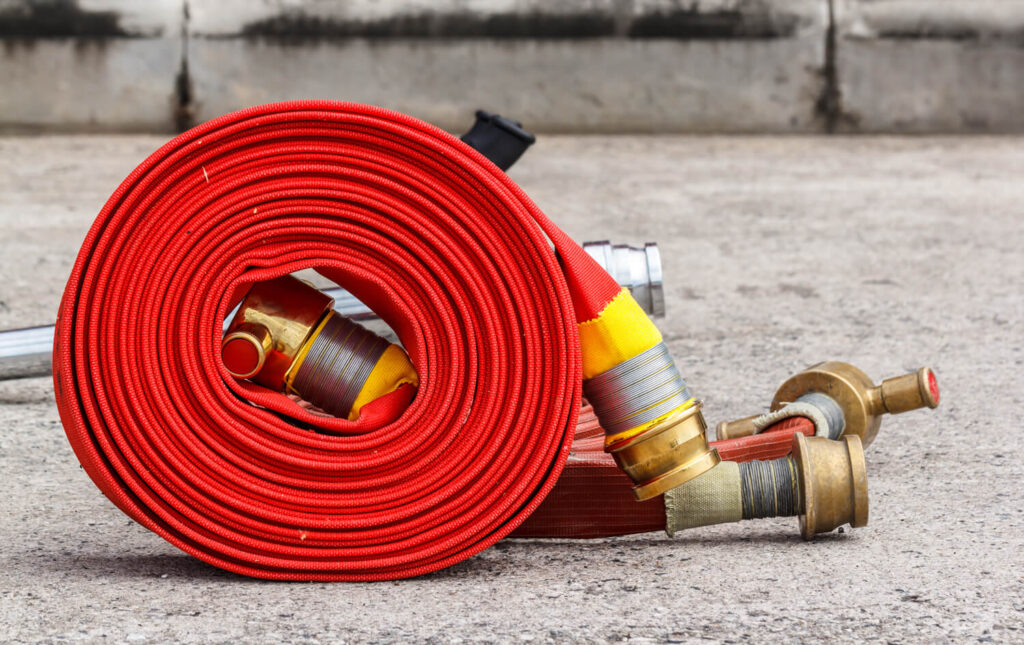
How the Manufacturing of Fire Hose Supports Global Safety
Behind every successful emergency response stands strong equipment. The Manufacturing of Fire Hose ensures that emergency teams can work with confidence and speed. The durability and reliability of these hoses help protect lives and reduce property loss.
Fire hose manufacturing is more than an industrial process—it is a contribution to global resilience.
The Manufacturing of Fire Hose is a meticulous and essential process. Every hose represents engineering, safety, and reliability. Understanding this process helps buyers make better decisions and ensures firefighters receive equipment they can trust.