Fire Alarm Valves sit at the heart of any fire protection system. Without them, even the most advanced sprinkler network would fail to respond effectively. In simple terms, these valves detect water flow and trigger an alarm when a fire event occurs. Yet, behind this simple function lies a sophisticated engineering system.
From manufacturing facilities to commercial buildings, these valves ensure safety. They act quickly. They respond without hesitation. And frankly, they often save millions in assets—and lives.
Now, if you are a building owner, contractor, or system integrator, understanding these valves is not optional. It is essential. Because choosing the wrong valve—or maintaining it poorly—can lead to catastrophic consequences.
Interestingly, many buyers assume all valves are the same. That is far from the truth. Each type serves a specific purpose, and selecting the right one depends on environment, risk level, and system design.
So, let’s dive deeper into how these systems actually work and why they matter more than ever in 2026.
Understanding Fire Alarm Valves in Modern Fire Protection
Fire protection systems have evolved rapidly. Gone are the days of simple mechanical setups. Today, systems are smarter, faster, and more integrated.
Fire Alarm Valves play a central role in this evolution.
At their core, these valves perform three main functions:
- Detect water flow in the system
- Trigger audible and visual alarms
- Activate connected fire safety systems
However, modern systems go beyond that. Many now integrate with:
- Building Management Systems (BMS)
- Remote monitoring platforms
- IoT-enabled sensors
Because of this, response times have improved dramatically. In fact, some advanced systems can alert emergency teams within seconds.
From a manufacturer’s perspective, one key trend stands out—precision engineering. Even minor pressure changes must be detected accurately. Otherwise, false alarms or delayed responses can occur.
That said, reliability remains the top priority. No matter how advanced a system is, it must work flawlessly under pressure—literally.
Types of Fire Alarm Valves and Their Applications
Different environments require different valve types. Choosing correctly can make all the difference.
Here are the main types:
Wet Pipe Valves
- Always filled with water
- Ideal for heated indoor environments
- Fastest response time
Dry Pipe Valves
- Filled with compressed air
- Used in freezing environments
- Slight delay in activation
Deluge Valves
- Open nozzles for high hazard areas
- Rapid water discharge
- Used in industrial facilities
Pre-Action Valves
- Require two triggers (fire detection + sprinkler activation)
- Prevent accidental discharge
- Ideal for data centers
Each type has its strengths. Yet, none is universally perfect. That’s why system design must align with real-world conditions.
Wet Pipe Fire Alarm Valves: Reliable and Simple
Wet pipe systems are the most common—and for good reason.
They are simple. They are reliable. And they require less maintenance.
Water remains inside the pipes at all times. So when a sprinkler head activates, water flows immediately. No delay. No complications.
Advantages include:
- Quick response
- Coût d'installation réduit
- Minimal mechanical complexity
However, they are not suitable for cold environments. Water can freeze. And when it does, the system fails.
From experience, many facility managers prefer wet systems for offices, malls, and residential buildings. They offer peace of mind without excessive complexity.
Dry Pipe Fire Alarm Valves: Built for Cold Environments
Dry pipe systems solve one major problem—freezing temperatures.
Instead of water, pipes contain pressurized air. When a sprinkler activates, the air releases first. Then water fills the system.
This process introduces a slight delay. But it prevents pipe damage.
Key benefits:
- Ideal for warehouses and outdoor structures
- Prevents freezing damage
- Durable under harsh conditions
Still, maintenance is more demanding. Air pressure must be monitored regularly. Any imbalance can cause system failure.
So, while dry systems are essential in certain environments, they require disciplined upkeep.
Deluge and Pre-Action Fire Alarm Valves: Advanced Protection
High-risk environments demand advanced solutions.
Deluge systems release large volumes of water instantly. All sprinklers activate at once. This is crucial in areas like:
- Usines chimiques
- Hangars à avions
- Centrales électriques
On the other hand, pre-action systems are more controlled. They require two triggers. This reduces accidental discharge.
This makes them ideal for:
- Centres de données
- Musées
- Archives
Interestingly, many engineers combine these systems with advanced detection technologies. The result? Faster response with minimal risk.
Key Components of Fire Alarm Valves Systems
A valve is more than just a valve. It is part of a larger system.
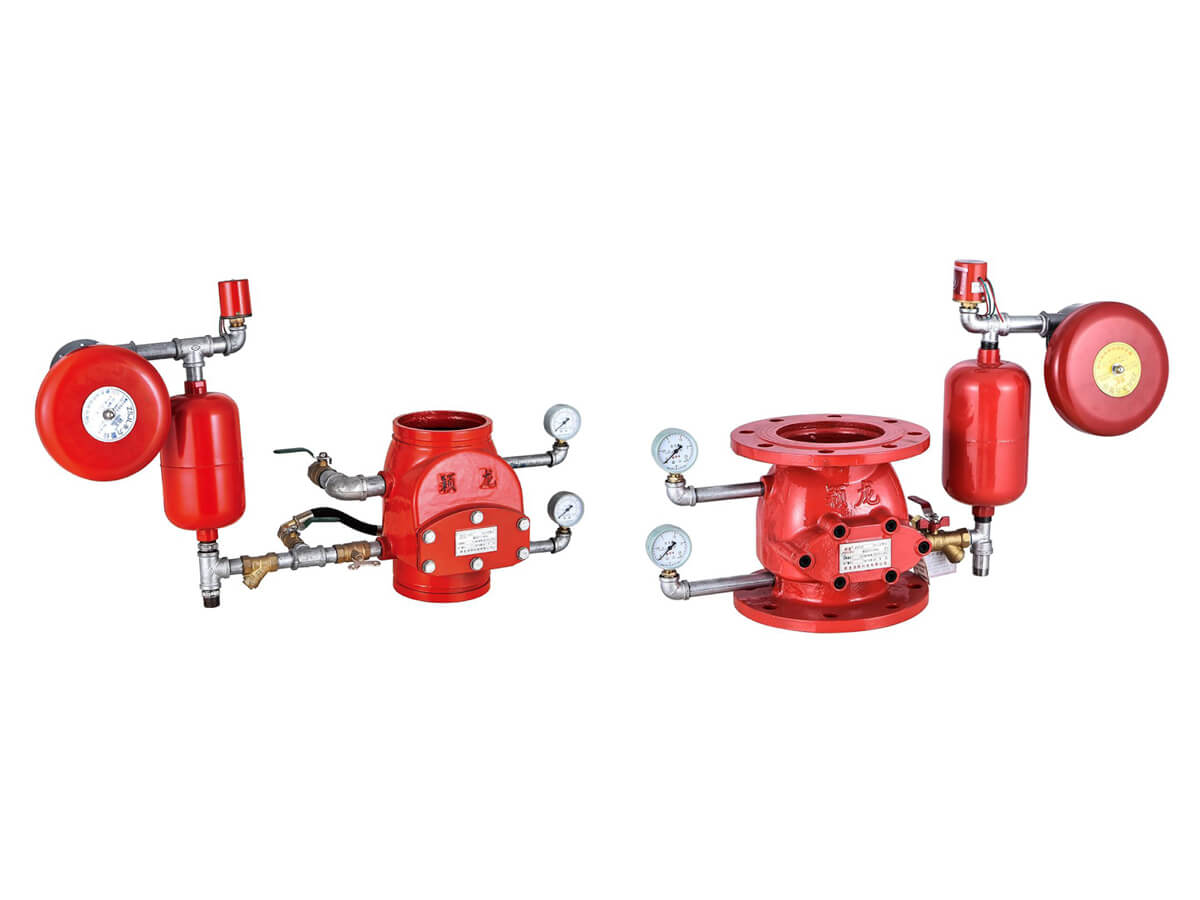
Key components include:
- Valve Body: Main control unit
- Trim Assembly: Pipes, fittings, and gauges
- Pressure Switch: Activates alarm
- Retard Chamber: Prévient les fausses alarmes
- Alarm Gong: Audible alert
Each component plays a role. If one fails, the entire system may be compromised.
From a manufacturing standpoint, quality control is critical. Even a small defect can lead to system failure.
How Fire Alarm Valves Operate in Real Situations
Let’s break it down simply.
When a fire occurs:
- Heat activates a sprinkler head
- Water begins to flow
- Valve detects flow change
- Alarm signal is triggered
- Emergency response begins
It sounds straightforward—and it is. But timing is everything.
A delay of even a few seconds can increase damage significantly.
That’s why modern systems focus on reducing response time. Faster detection means better protection.
Installation Best Practices for Fire Alarm Valves
Installation is not just technical—it is strategic.
Important considerations:
- Proper location selection
- Compliance with fire safety standards
- Accessibility for maintenance
- Correct pressure settings
Les erreurs les plus courantes sont les suivantes :
- Poor pipe alignment
- Incorrect valve sizing
- Ignoring environmental factors
Working with experienced manufacturers and installers can prevent these issues.
Maintenance and Inspection of Fire Alarm Valves
Regular maintenance ensures reliability.
Routine checks include:
- Visual inspections
- Pressure testing
- Alarm function testing
- Leak detection
A typical maintenance schedule:
| Task | Frequency |
|---|---|
| Inspection visuelle | Monthly |
| Functional testing | Quarterly |
| Full system check | Annually |
Skipping maintenance is risky. Systems may fail when needed most.
Comparison Chart of Fire Alarm Valve Types
| Type | Environment | Temps de réponse | Complexity | Best Use |
|---|---|---|---|---|
| Tuyau humide | Intérieur | Fast | Faible | Bureaux |
| Tuyau sec | Cold areas | Modéré | Moyen | Entrepôts |
| Déluge | High hazard | Instant | Haut | Industrial plants |
| Pré-action | Sensitive areas | Controlled | Haut | Centres de données |
Innovations in Fire Alarm Valves 2026
Technology is reshaping fire safety.
Key innovations include:
- Smart valves with IoT connectivity
- Remote monitoring systems
- Predictive maintenance tools
- AI-based fire detection integration
These advancements improve efficiency. They also reduce downtime and maintenance costs.
How to Choose the Right Fire Alarm Valves for Your Project
Choosing the right valve requires careful evaluation.
Envisager :
- Building type
- Environmental conditions
- Risk level
- Budget constraints
For B2B buyers, reliability and compliance are key. Certifications like UL and FM approval are essential.
Working with a trusted manufacturer ensures quality and support.
FAQ
What are Fire Alarm Valves used for?
Fire Alarm Valves are used to detect water flow in fire protection systems and trigger alarms. They play a critical role in ensuring quick response during fire incidents, helping protect property and lives effectively.
How often should Fire Alarm Valves be inspected?
Inspection should occur monthly for visual checks, quarterly for functional tests, and annually for full system evaluation. Regular maintenance ensures reliability and prevents unexpected failures during emergencies.
What is the difference between wet and dry valves?
Wet valves contain water at all times and respond quickly. Dry valves use air pressure and are designed for cold environments. While dry systems prevent freezing, they have a slightly slower response time.
Are Fire Alarm Valves suitable for industrial use?
Yes, especially deluge and pre-action systems. These valves are designed for high-risk environments such as factories, power plants, and chemical facilities where rapid response is critical.
Can Fire Alarm Valves be integrated with smart systems?
Modern Fire Alarm Valves can integrate with IoT and building management systems. This allows remote monitoring, faster alerts, and improved system efficiency, making them ideal for advanced infrastructure.
What factors affect the lifespan of Fire Alarm Valves?
Factors include material quality, maintenance frequency, environmental conditions, and system pressure. Proper installation and regular inspection can significantly extend the lifespan of these valves.
Réflexions finales
Fire protection is not an area where you cut corners. Fire Alarm Valves may seem like a small component, yet they carry enormous responsibility. Choosing the right system, maintaining it properly, and working with experienced manufacturers can make all the difference.
Just like a well-designed promotional product strengthens brand relationships, a well-engineered fire protection system safeguards your business assets. Want to maximize safety and efficiency? Contact our engineering team today. Share your project requirements, and receive a tailored fire protection solution along with expert consultation.