Fire safety is not something you want to leave to chance. The Fire Sprinkler Production Process plays a vital role in protecting lives and property across industries. Whether you manage a warehouse, factory, or commercial building, you rely on these systems to act instantly during emergencies.
From a manufacturer’s perspective, producing fire sprinklers is both a science and an art. It involves precise engineering, strict quality checks, and careful material selection. Every step matters because even a small flaw could lead to failure during a fire event.
In today’s global market, buyers expect reliable, certified, and durable products. That means manufacturers must follow international standards and continuously improve their processes. Many companies now invest in advanced technologies and automation to ensure consistency and efficiency.
You might not think about it often, but every sprinkler head above your ceiling has gone through a detailed journey. Understanding this process helps you make better purchasing decisions and ensures you partner with the right supplier.
Fire Sprinkler Production Process
The Fire Sprinkler Production Process includes several carefully controlled steps. Each stage ensures the final product performs perfectly under pressure.
First, manufacturers select raw materials like brass or stainless steel. These materials must resist corrosion and handle high temperatures. Next comes shaping and machining. This is where components take their final form.
After machining, parts move to assembly. Here, elements such as the frame, deflector, and heat-sensitive bulb are combined. Precision is key. Even a slight misalignment can affect performance.
Testing follows assembly. Each unit is checked for leaks, pressure resistance, and activation accuracy. Only after passing these tests does the product move to packaging.
Here’s a simple overview:
| Stage | Propósito |
|---|---|
| Material Selection | Ensure durability |
| Machining | Shape components |
| Assembly | Combine parts |
| Testing | Guarantee performance |
| Packaging | Prepare for delivery |
This structured approach ensures every sprinkler meets safety standards and customer expectations.
Design and Engineering of Fire Sprinklers
Before production begins, design plays a crucial role. Engineers use advanced software to create detailed models of sprinkler components. These designs must meet strict safety standards.
Each sprinkler is designed to activate at a specific temperature. This requires careful calculation and testing. Engineers also consider water flow rate, spray pattern, and pressure resistance.
You’ll notice that different industries require different designs. For example, industrial facilities often need high-pressure systems, while residential buildings require compact and efficient models.
Design teams also focus on compliance. Products must meet standards such as UL, FM, or CE certifications. Without these, the product cannot enter many global markets.
A well-designed sprinkler ensures:
- Fast activation during fire
- Even water distribution
- Larga vida útil
- Minimal maintenance
In short, design is the foundation of a reliable fire protection system.
Raw Materials Used in Fire Sprinkler Manufacturing
Material selection directly affects product quality. Most fire sprinklers are made from brass alloys. Brass offers excellent corrosion resistance and durability.
Some manufacturers also use stainless steel for special applications. This is common in environments with high humidity or chemical exposure.
The heat-sensitive bulb contains a liquid that expands when heated. This liquid must be carefully selected to ensure accurate activation temperatures.
Common materials include:
- Brass for frames and fittings
- Stainless steel for corrosion resistance
- Glass for heat-sensitive bulbs
- Special liquids for thermal response
Choosing the right materials ensures your sprinkler system performs reliably for years. It also reduces maintenance costs and increases safety.
Casting and Machining Processes
Once materials are selected, the manufacturing process begins with casting and machining. Casting involves pouring molten metal into molds to form basic shapes.
After casting, components go through CNC machining. This step ensures precise dimensions and smooth surfaces. Accuracy is critical here.
Machining also creates threads, отверстия, and other detailed features. These features allow components to fit together perfectly during assembly.
Surface finishing follows machining. This may include polishing or coating to improve corrosion resistance and appearance.
Benefits of advanced machining:
- High precision
- Consistent quality
- Reduced defects
- Faster production
Modern factories rely heavily on automation during this stage. This improves efficiency and reduces human error.
Assembly Line in Fire Sprinkler Production
Assembly is where everything comes together. Workers or automated systems combine all components into a complete sprinkler unit.
Each part must fit perfectly. Seals must be tight to prevent leaks. The deflector must align correctly to distribute water evenly.
Quality checks are performed at multiple points during assembly. This ensures any defects are caught early.
Typical assembly steps include:
- Installing the frame
- Attaching the deflector
- Inserting the glass bulb
- Sealing the unit
A well-organized assembly line improves efficiency and ensures consistent product quality.
Heat-Sensitive Element Manufacturing
The heat-sensitive element is the heart of a sprinkler. Most systems use a glass bulb filled with liquid.
When the temperature rises, the liquid expands. This causes the bulb to break, releasing water.
Manufacturing this component requires extreme precision. The liquid must be filled accurately, and the glass must be sealed perfectly.
Temperature ratings vary. Common activation temperatures include 57°C, 68°C, and 79°C.
This component determines how quickly the sprinkler responds during a fire. That’s why strict quality control is essential.
Testing and Quality Control in Fire Sprinkler Production Process
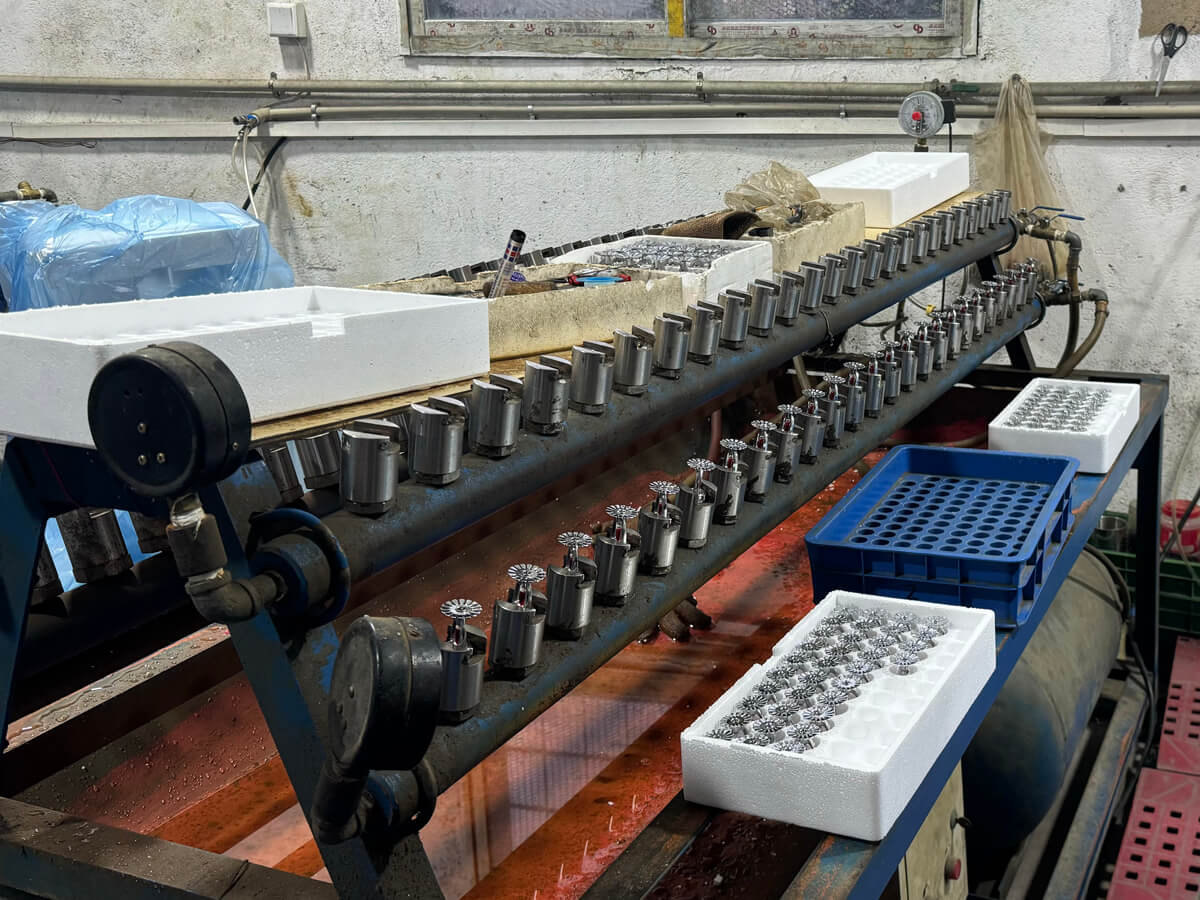
Testing is one of the most critical stages. Every sprinkler must pass strict quality checks before leaving the factory.
Tests include:
- Pressure testing
- Leak detection
- Temperature response testing
Manufacturers often follow international standards. You can learn more about these standards from organizations like the
Asociación Nacional de Protección contra Incendios.
Products that fail testing are rejected or reworked. This ensures only high-quality units reach customers.
Quality control also includes visual inspections and dimensional checks. These steps ensure consistency across batches.
Packaging and Distribution of Fire Sprinklers
After testing, sprinklers are carefully packaged. Packaging protects the product during transportation.
Manufacturers use durable materials to prevent damage. Labels include important information such as model number and specifications.
Distribution involves logistics planning. Products must reach customers safely and on time.
For international shipments, compliance with export regulations is essential. Proper documentation ensures smooth delivery.
Innovations in Fire Sprinkler Production
The industry is evolving quickly. New technologies are improving both production and product performance.
Smart sprinklers are becoming more common. These systems can connect to building management systems and provide real-time data.
Automation is also transforming manufacturing. Robots now handle tasks like assembly and inspection.
Sustainable materials are another trend. Manufacturers are reducing waste and improving energy efficiency.
These innovations help you get better products at lower costs.
Applications of Fire Sprinklers in Different Industries
Fire sprinklers are used in many sectors. Each industry has unique requirements.
Common applications include:
- Residential buildings
- Commercial spaces
- Instalaciones industriales
- Almacenes
Industrial systems often require higher pressure and specialized designs. Residential systems focus on compact size and ease of installation.
Understanding these applications helps you choose the right product for your needs.
Benefits of High-Quality Fire Sprinkler Systems
Investing in quality sprinklers offers many advantages. First, it ensures safety. A reliable system can prevent major damage during a fire.
Second, it reduces costs. Early fire suppression minimizes repair expenses.
Third, it ensures compliance with safety regulations. This is essential for businesses.
Key benefits include:
- Improved safety
- Menores costes de seguro
- Long-term reliability
- Regulatory compliance
Common Challenges in Fire Sprinkler Manufacturing
Manufacturers face several challenges. Material inconsistencies can affect product quality. Strict regulations also require continuous updates.
Production defects are another concern. Even minor issues can lead to failure.
To overcome these challenges, manufacturers invest in advanced technology and skilled workers.
Future Trends in Fire Sprinkler Production Process
The future looks promising. AI and IoT are expected to play a big role.
Smart systems will provide real-time monitoring. This improves safety and efficiency.
Green manufacturing will also become more important. Companies will focus on reducing environmental impact.
These trends will shape the next generation of fire protection systems.
Preguntas frecuentes
What is the Fire Sprinkler Production Process?
It is a multi-step manufacturing method that includes design, material selection, machining, assembly, testing, and packaging. Each stage ensures the sprinkler meets safety and performance standards before reaching the customer.
Why is material selection important in fire sprinklers?
Materials like brass and stainless steel provide durability and corrosion resistance. Choosing the right material ensures long-term reliability and reduces maintenance costs for end users.
How are fire sprinklers tested?
They undergo pressure tests, leak detection, and temperature response checks. These tests ensure the sprinkler activates correctly during a fire and performs reliably under different conditions.
What industries use fire sprinkler systems?
They are widely used in residential, commercial, and industrial settings. Warehouses, offices, and factories rely heavily on these systems for fire protection.
How do heat-sensitive bulbs work?
The bulb contains a liquid that expands when heated. Once the temperature reaches a set level, the bulb breaks, allowing water to flow and suppress the fire.
What should buyers look for in a manufacturer?
You should check certifications, production capabilities, quality control systems, and experience. A reliable manufacturer ensures consistent quality and timely delivery.
Conclusión
The Fire Sprinkler Production Process is a detailed and highly controlled journey. From raw materials to final testing, every step ensures safety and reliability.
As a buyer, understanding this process helps you make smarter decisions. It allows you to choose a manufacturer that meets your quality and compliance needs.
In today’s competitive market, working with a trusted supplier is more important than ever. High-quality fire sprinklers not only protect property but also save lives.
“Partner with a trusted manufacturer today and ensure your fire protection systems meet the highest global standards for safety and performance.”